
A Cafe in Paris.
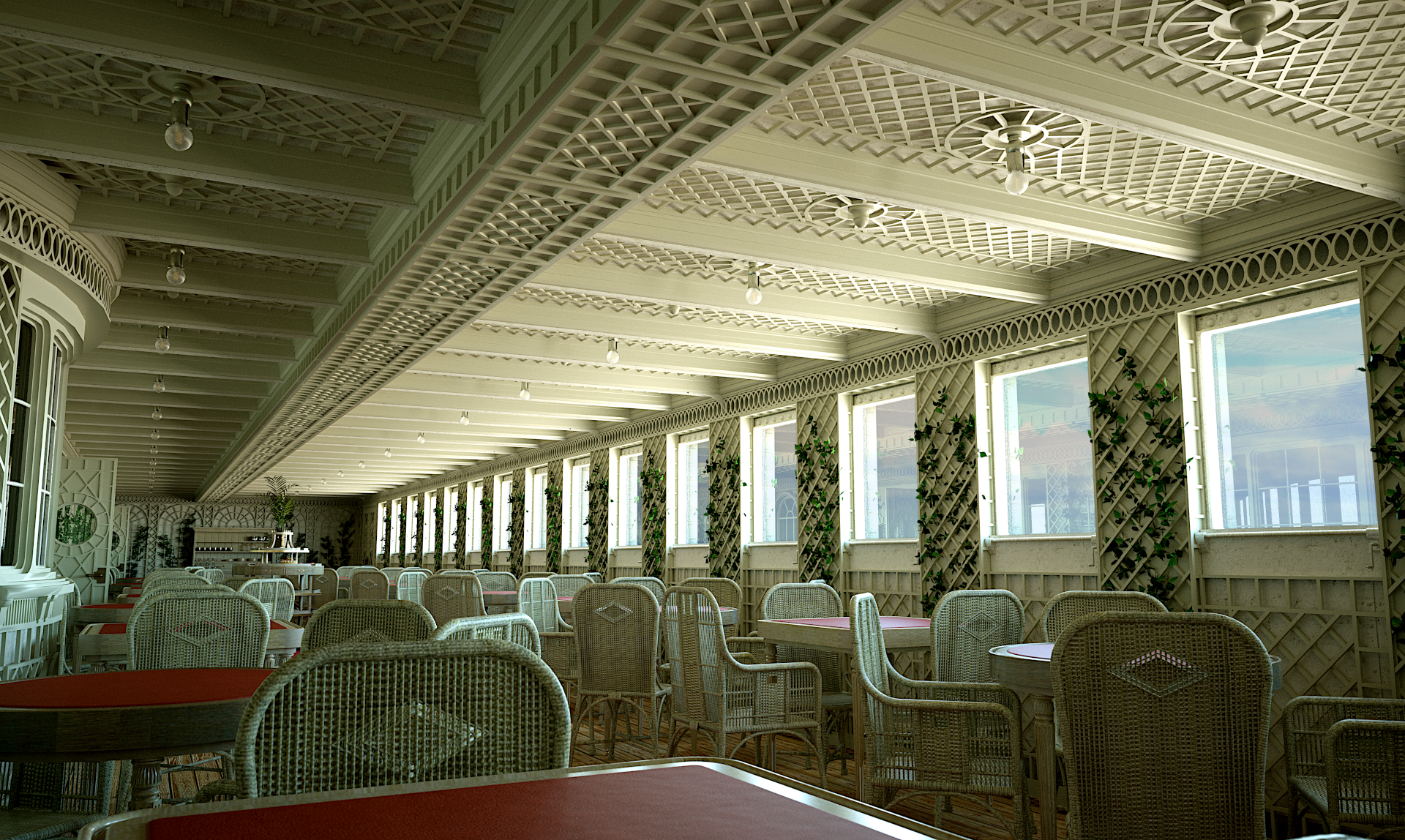
The Café Parisien on Titanic by RMSTitanic.Design
The Café Parisien has always been widely considered to be a Parisian-style cafe, replicating the fashionable sidewalk coffee establishments of Paris and all the Edwardian elegance that goes with that scenario.
What if I told you that this is not technically why its called the ‘Café Parisien’?
If you've ever been to Paris, you'll know the sidewalk cafes do not look like Titanic's Café Parisien and never has.
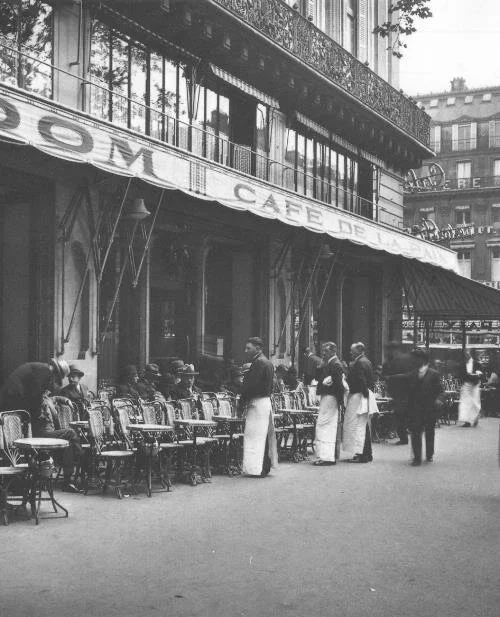
The exterior photograph of an actual Parisian cafe (1910). Rows of chairs facing the sidewalk for people to people-watch and enjoy the weather. Wooden cane chairs with small marble top tables.
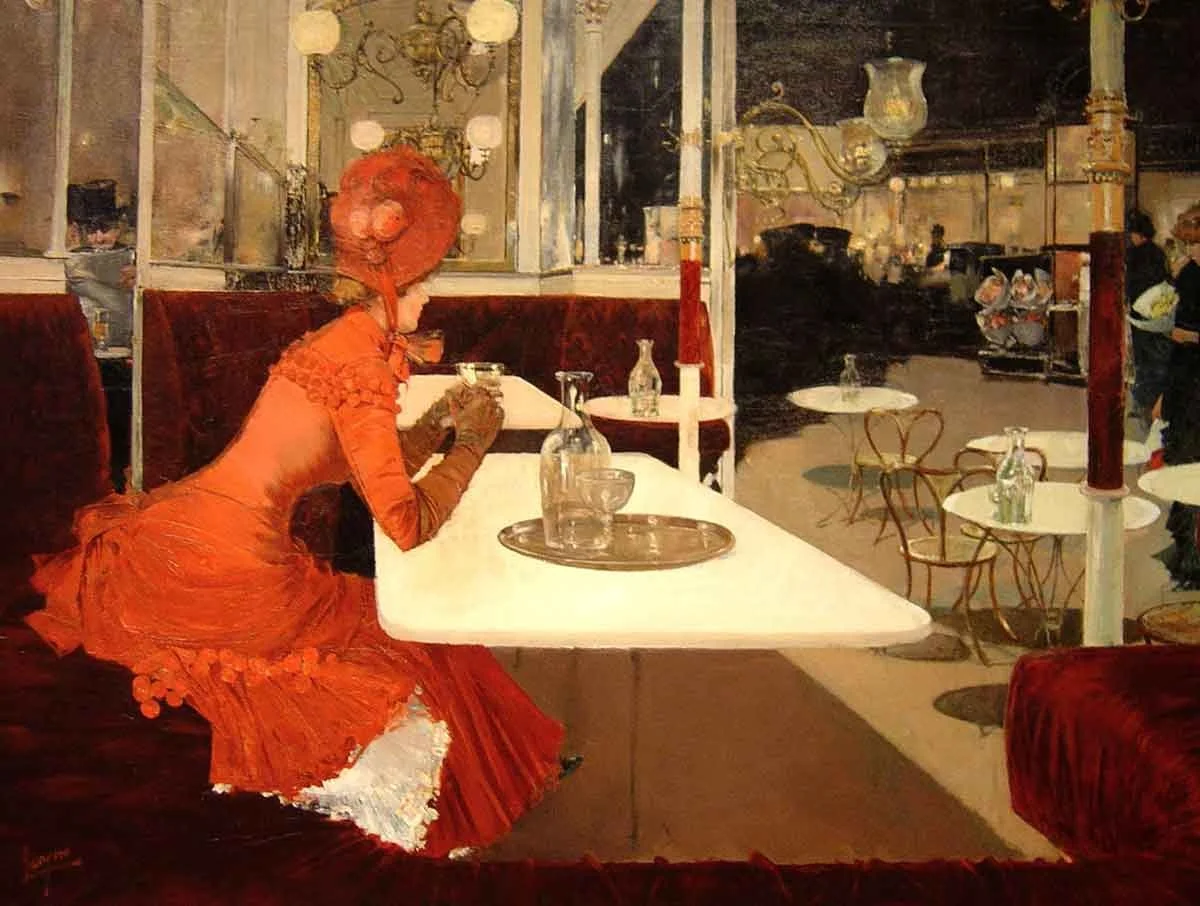
A painting by Fernard Lungren - The café 1882. Image shows a ladie enjoying the delights of a parisien cafe
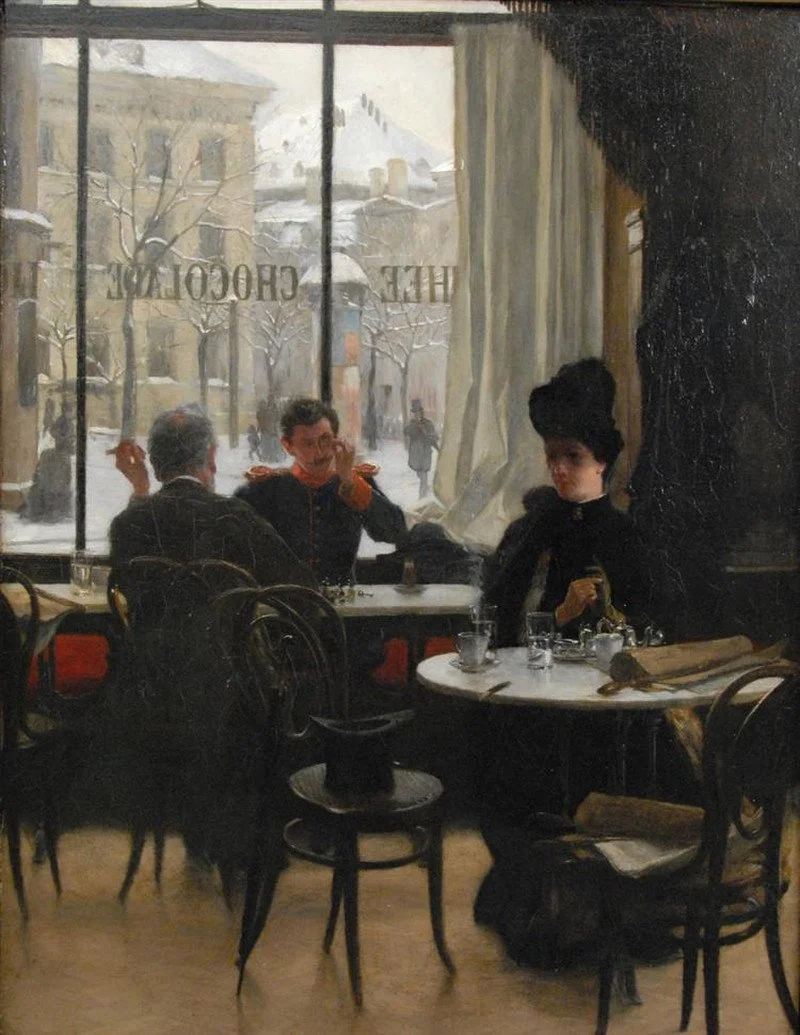
A painting by Robert Koehler - At the cafe 1887. Image shows people enjoying coffee in a Paris cafe.
An actual Paris cafe is usually decorated in dark polished woods, tiled floor with wooden cane chairs and marble top tables. Often large windows allowing light to flood in with velvet sofas underneath and along the outside walls of the room. Outside, they usually have tables facing out onto the street, all lined up with chairs on one side of the tables so people can 'people watch'.
Very different to the layout of the Cafe Parisien on Titanic.
The Cafe Parisian was a new addition to the Olympic class, first introduced on Titanic as part of the newly extended A La carte Restaurant.
When Titanic lost her B-deck enclosed promenade to make more spacious First-class cabins, Second-class advertantly lost one half of their B-deck promenade to the newly extended first class À la Carte Restaurant extension.
The designers could have left the space as the Second-class promenade, but this would left the promenade unsymmetrical.
The First-class restaurant on Olympic was also originally looked out to the Second- class promenade, First-class passengers would complain about Second-class children peering in as they ate. The designers were reluctant to keep the space as Second-class.
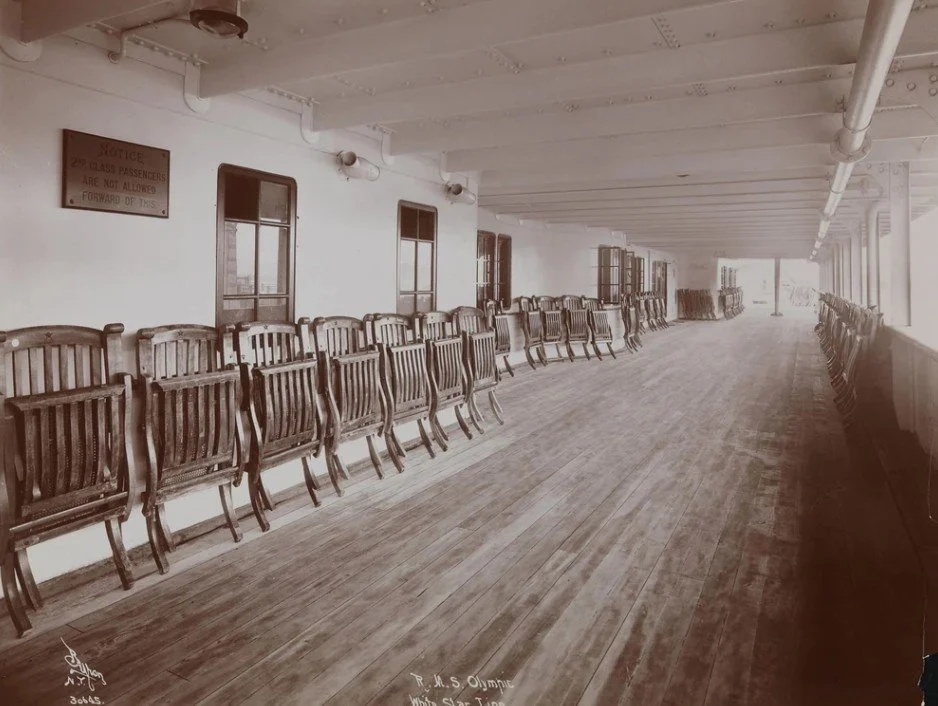
A photograph of Olympics 2nd-class B-Deck promenade as it looked in 1911
Designers could have just extended the restaurant to the full width of the ship, but White Star didn't want the restaurant to compete with the main dining room, or to take away from its exclusivity in having more availability.
It was originally decided to keep it as a first class promenade with direct access for the restaurant to use it as an outdoor terrace.
This idea quickly developed into an outdoor cafe, to boost sales for the restaurant during the day.
Edwardian's loved the outdoors and were encouraged to be outside whenever possible, with strolling on promenades or a picnic in the park or tea in an English garden. The outdoor space was just as important as the interiors.
Of course the original design of the Olympic and Titanic had the two Verandah Cafes on the A-Deck promenade deck, so the designers had already catered for this trend. But those cafes were weather dependent and included within the ticket price. The new cafe idea was an extra revenue opportunity as well as being operational in all weather.
Designers wanted to decorate the space to separate it from the ordinary promenades and give it a much more garden-like design. With the Titanic already built, not much could be altered in terms of structure and the space had to be decorated around existing, and possibly unwanted structures.
The designers came up with the idea of turning the space into an English garden with the use of trellising and plants. The style of trellising used was the Paris trellis of Versailles.
Paris trellising was very popular at the time in country gardens and conservatory cafes in both England and France. It consisted of creating classic architectural shapes with the trellising and encouraging plants to grow using the trellis. Archways were commonly created as well as urns and columns.
Usually painted a muted cream or a pale green, the trellis was stylised to created a structure or a man-made garden.
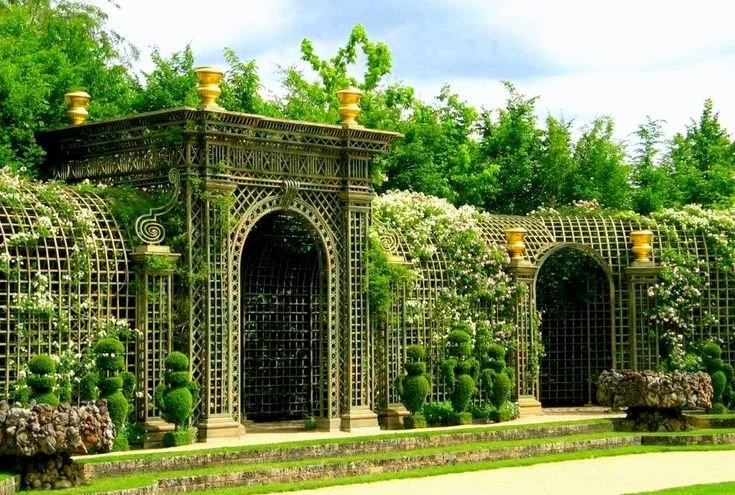
A photograph of Paris trellis at Versailles
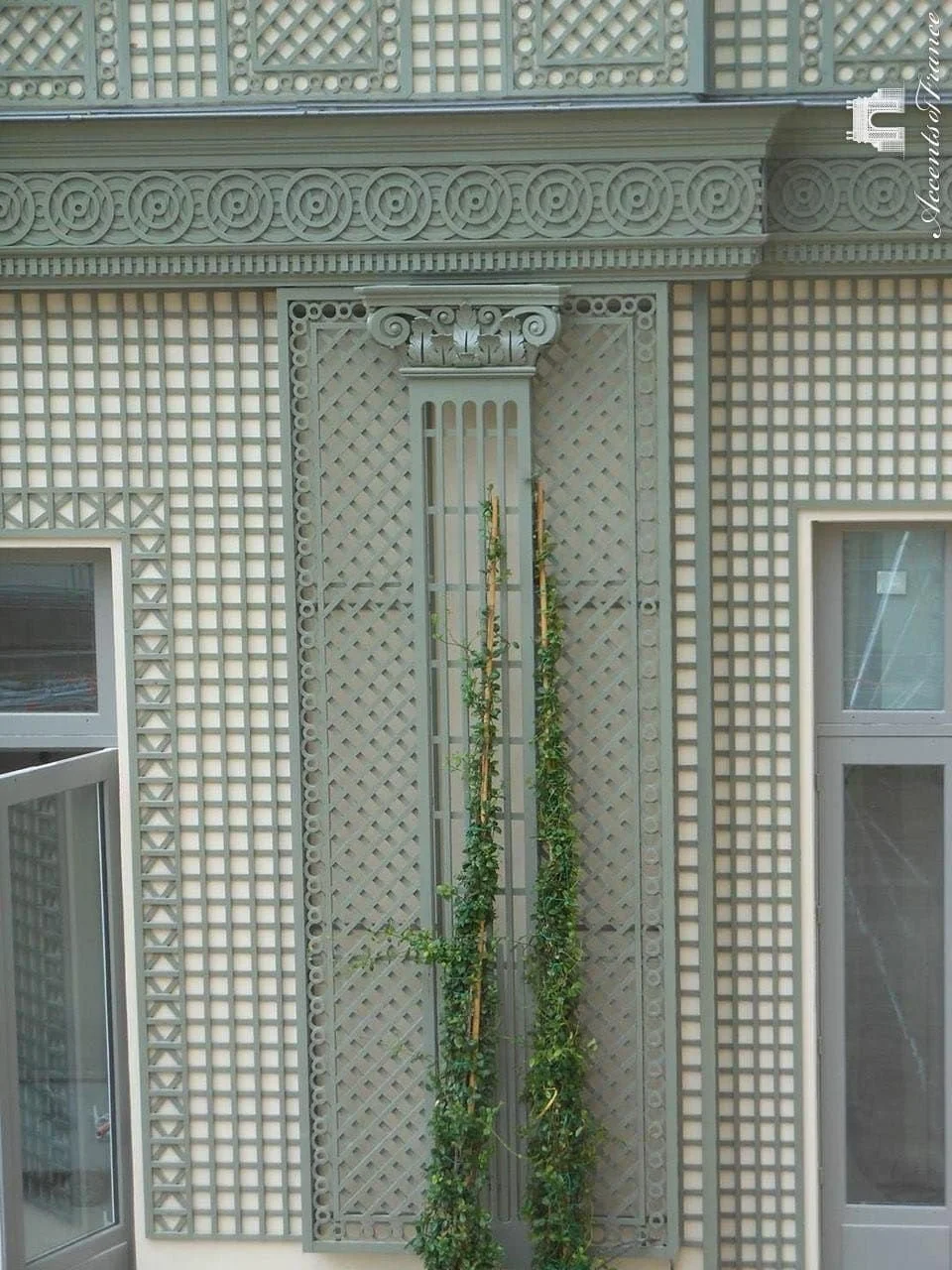
Example of Paris Trellising style
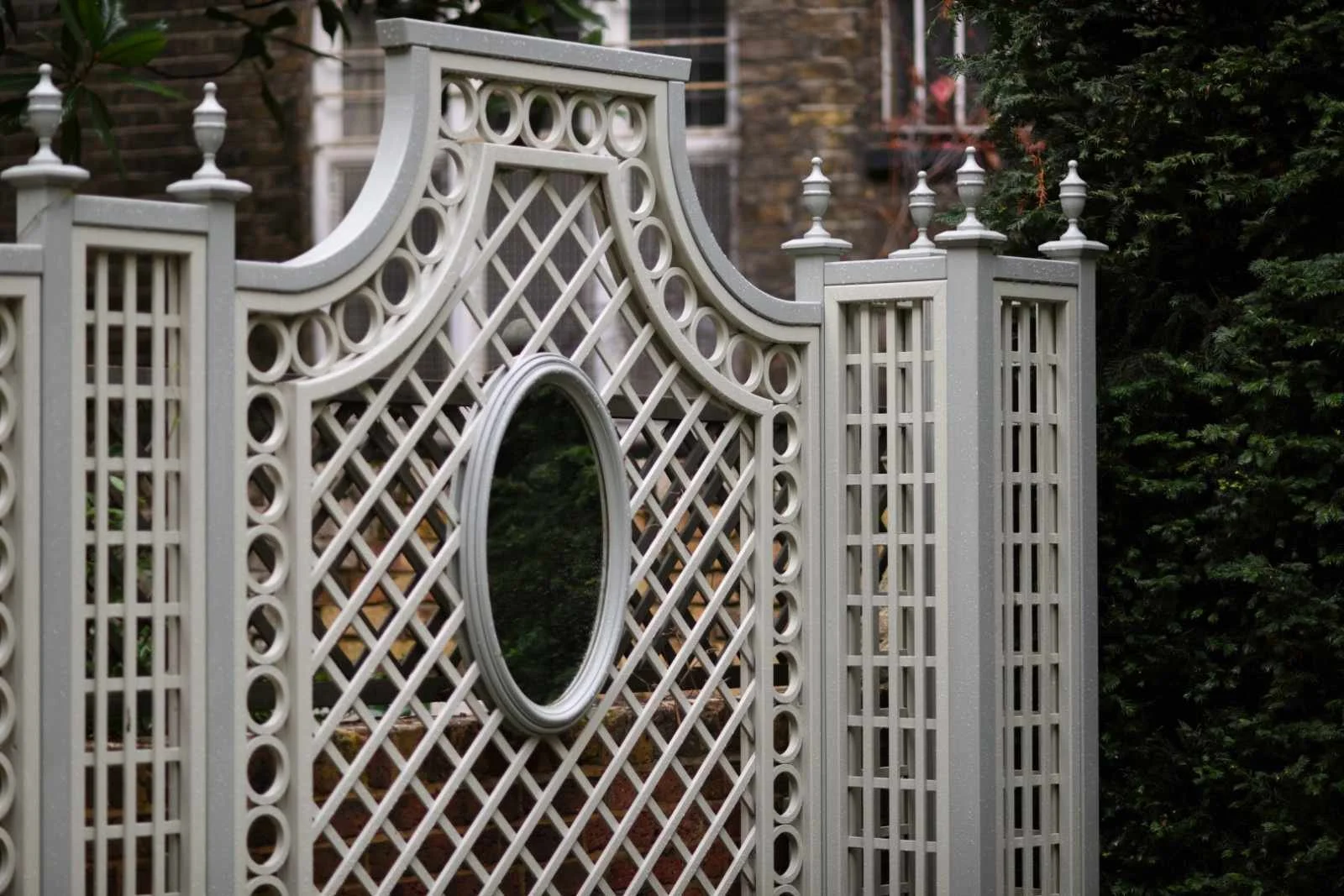
Paris Trellising style
The Titanic designers used Paris trellis to hide the bare steel walls using arches and circular motifs. They encouraged plants to grow up the trellis to further hide the steelwork.
The bay window of the restaurant adds to the style and was covered in Paris trellising, as well as the ceiling and beams.
Garden furniture of wicker were added to emphasise the garden-like feel and pastel colours of pinks and greens were used to upholster the cushions and table tops with a full length carpet running down the cafe to all mute echo.
Designers would refer to it as the 'Paris' room, just like they did with the 'Regency room' or the 'Queen Anne room'. This influenced its eventual name.
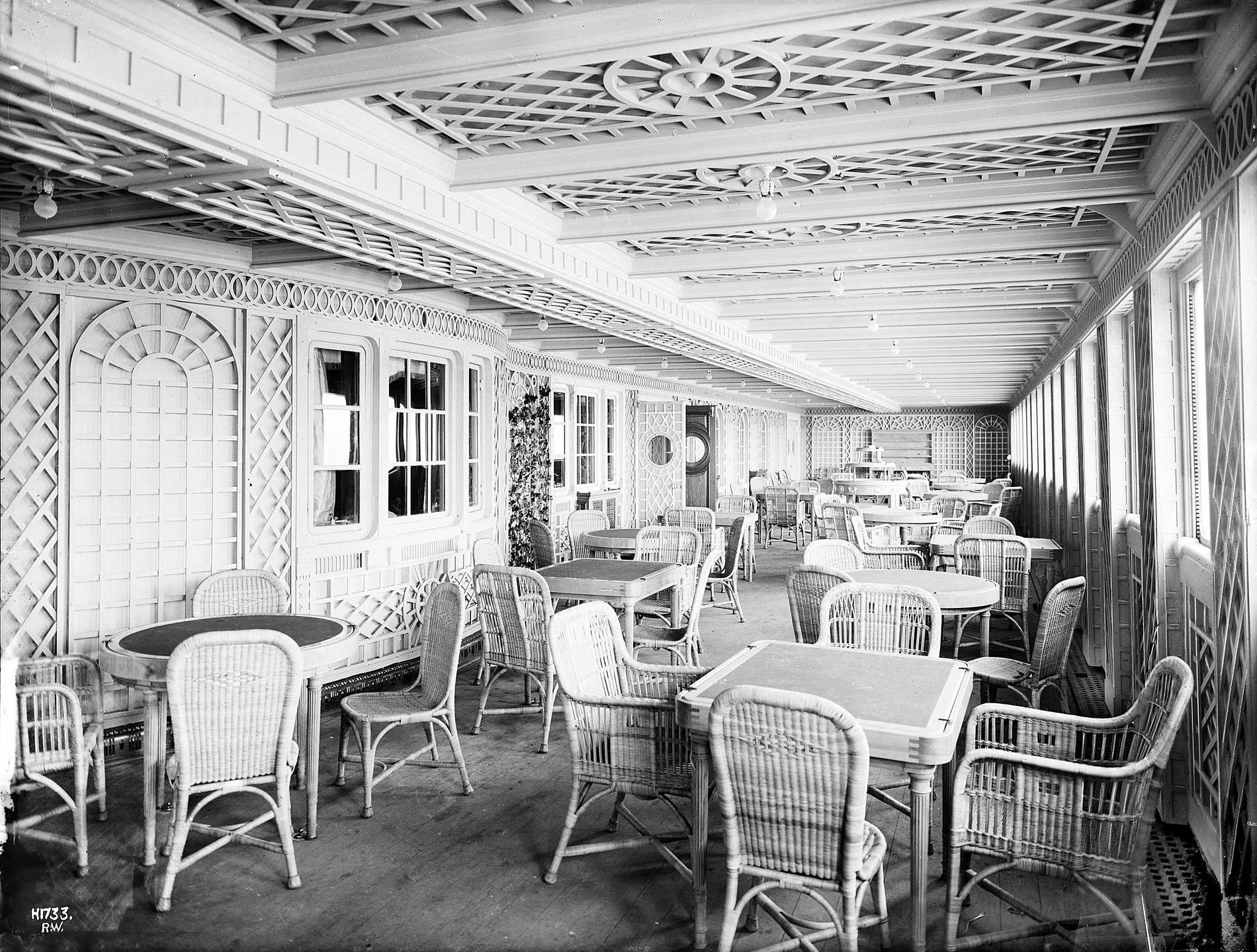
A Photograph of Titanic’s newly finished Cafe Parisien 1912
So, the reason it is called the 'Café Parisien' was because of the Paris trellis of its design and not because it replicated a sidewalk cafe in Paris.
The cafe however, proved very popular on Titanic, especially with the younger and single travelers. Shortly after the loss of the Titanic, a Parisien cafe was installed on the Olympic and was very popular too. Later in her career, the room was turned into a cocktail bar with direct access from the Restaurant.
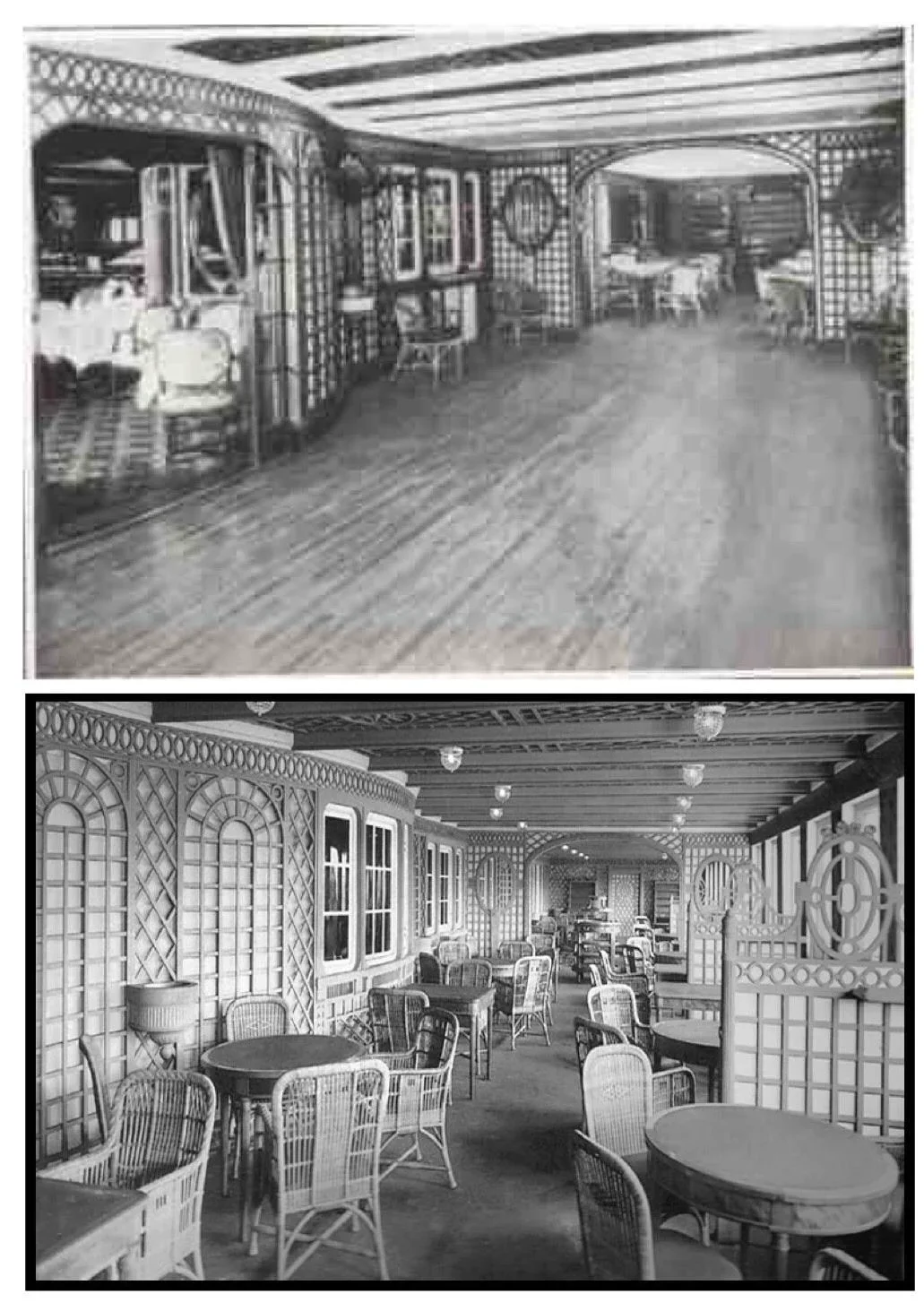
Photographs of Olympic’s Cafe Parisien (Top) 1930. And converted cocktail bar (Bottom) 1913 with green Paris trellising
Do you find this interesting? Let me know what you think.
Written and researched by Chris Walker from RMSTitanic.Design



Titanic Facade Mug
All artwork by RMSTitanic.Design
Whether you're drinking your morning coffee, evening tea, or something in between—this mug's for you! It's sturdy and glossy with a vivid print that'll withstand the microwave and dishwasher.
• Ceramic
• 11 oz mug dimensions: 3.8″ (9.6 cm) in height, 3.2″ (8.2 cm) in diameter
• 15 oz mug dimensions: 4.7″ (11.9 cm) in height, 3.3″ (8.5 cm) in diameter
• 20 oz mug dimensions: 4.3″ (10.9 cm) in height, 3.7″ (9.3 cm) in diameter
• Lead and BPA-free material
• Dishwasher and microwave safe
• Blank product sourced from China
This product is made especially for you as soon as you place an order, which is why it takes us a bit longer to deliver it to you. Making products on demand instead of in bulk helps reduce overproduction, so thank you for making thoughtful purchasing decisions!
Age restrictions: For adults
EU Warranty: 2 years
Other compliance information: Meets the lead and cadmium level requirements.
In compliance with the General Product Safety Regulation (GPSR), Oak inc. and SINDEN VENTURES LIMITED ensure that all consumer products offered are safe and meet EU standards. For any product safety related inquiries or concerns, please contact our EU representative at gpsr@sindenventures.com. You can also write to us at 123 Main Street, Anytown, Country or Markou Evgenikou 11, Mesa Geitonia, 4002, Limassol, Cyprus.