
Life onboard at sea.
In comparison to contemporary standards, life onboard and entertainment during the Titanic era was notably limited. Today, the prospect of spending five days at sea without modern forms of amenities, entertainment, WIFI and modern technology, might seem quite challenging. However, it's essential to understand that in 1912, entertainment held a different significance; it was more of a novelty in everyday life. The Edwardian era characterised by a simpler pace of life, where activities like attending the theatre or dining out were considered entertaining occasions.
As they used to say, ‘‘Not enough to do and not enough time to do it’’
Onboard the Titanic, the daily ritual of dressing up for dinner and experiencing the ambiance of a five-star luxury hotel for a week was, in itself, a form of entertainment, particularly for passengers in the lower classes. Nevertheless, Titanic did offer some new and exciting amenity options, ensuring that passengers across all classes and nationalities had a variety of activities to engage in during their voyage.
Promenading
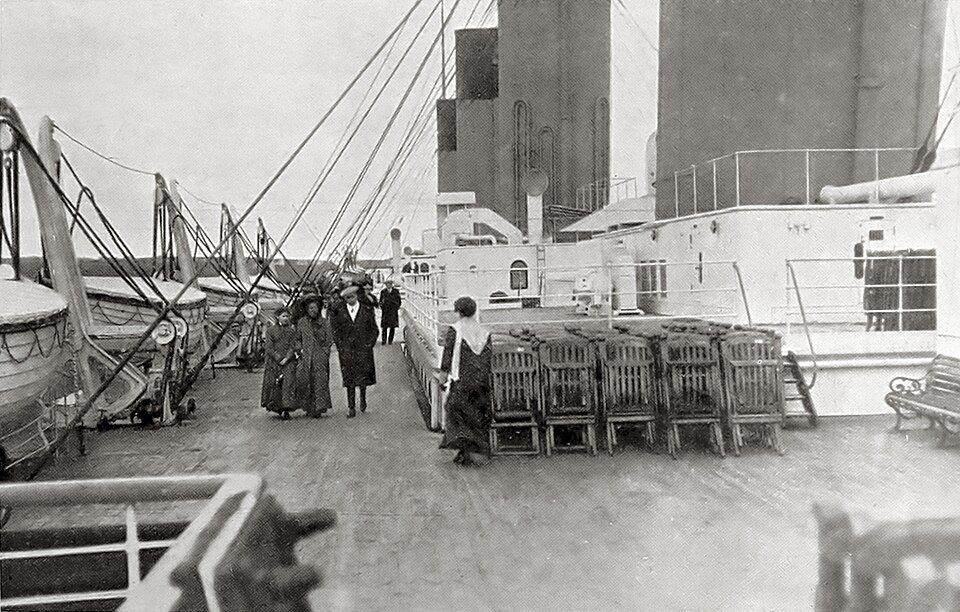
Photograph of Second- class passengers promenading on Titanic's Boat deck April 1912
Promenading held a special place in the leisure activities of the Edwardian era. It involved taking a relaxed public stroll, typically along the waterfront or in a park. The Edwardians highly valued the benefits of fresh air, believing it contributed to good health. However, promenading was more than just a health-conscious pastime; it was a social affair of utmost importance to Edwardian society.
For passengers on ocean liners like the Titanic, promenading served as an opportunity to observe the social hierarchy, scrutinise fashion choices, and engage in gossip. Passengers actively sought to be seen with specific individuals and used this setting to flaunt their latest fashion ensembles. Some even rented deck chairs at strategic locations to have the best vantage point for people-watching or catching the attention of someone they were interested in.
The Titanic was purposefully designed to accommodate this social ritual in both first and second class. Both classes enjoyed ample deck space for leisurely strolls, and enclosed areas ensured that promenading could continue even in adverse weather conditions. In contrast, third-class passengers often utilised their deck space for fresh air and recreational activities rather than formal promenading.
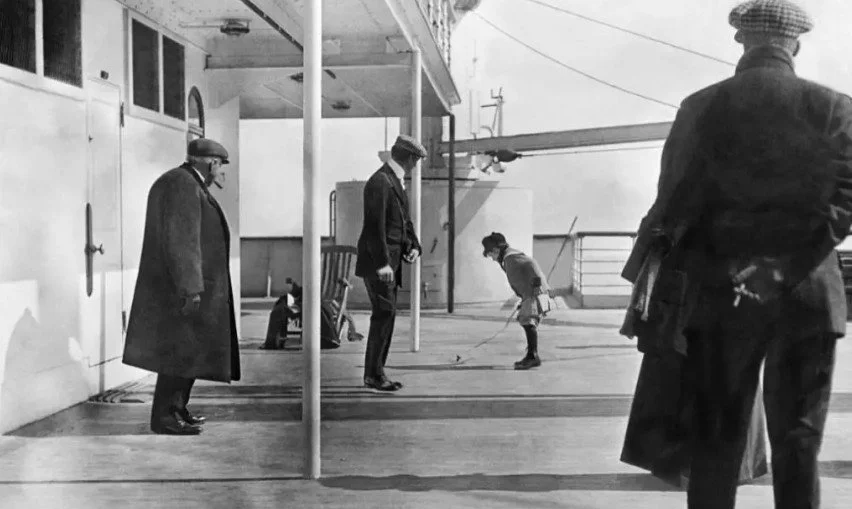
A photograph of a boy playing deck games on Titanic 1912
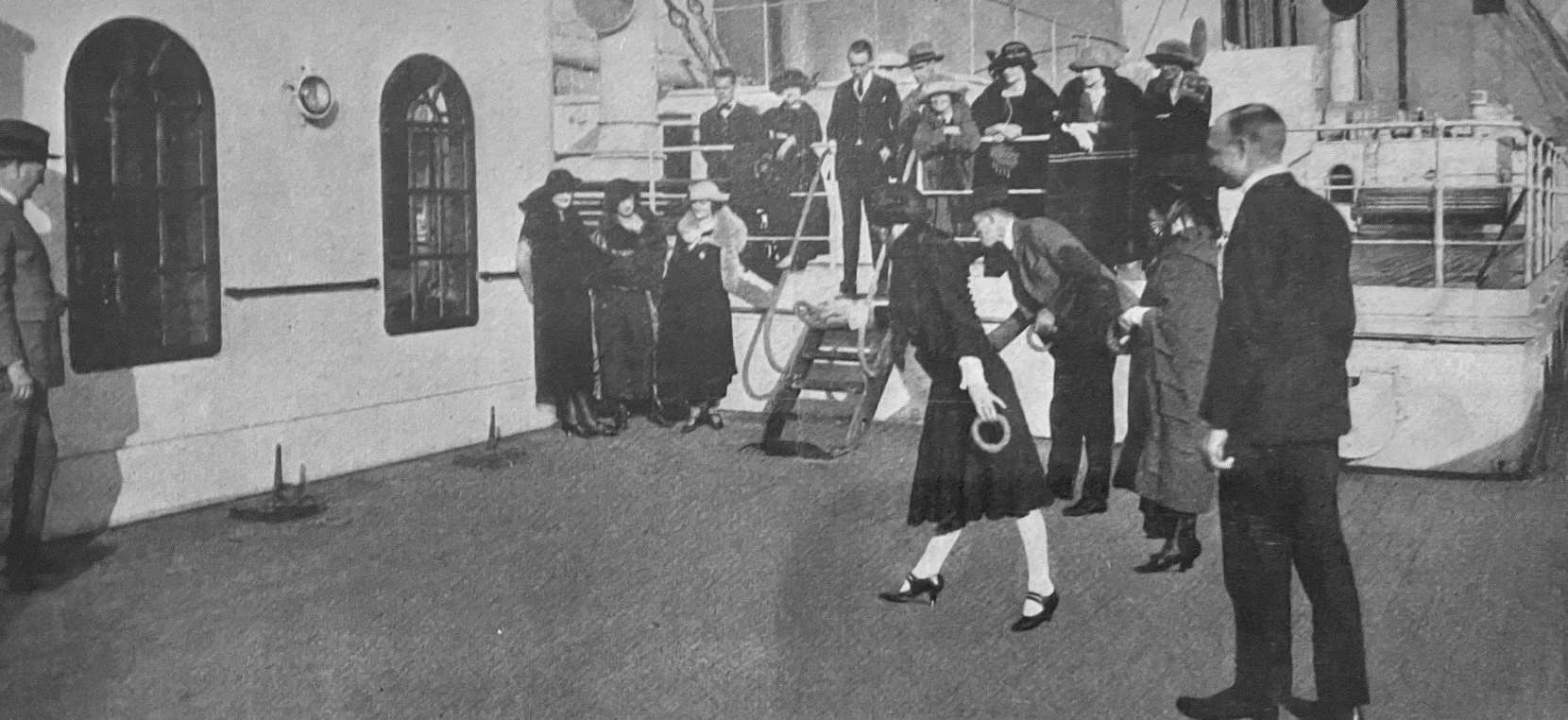
Photograph of Passengers playing deck quoits on Olympic 1930
Engaging in deck games was a cherished activity aboard any ship during the Edwardian era. When the weather was favorable, passengers anticipated the opportunity to participate in various sports and recreational games outdoors. Games like shuffleboard, cricket, deck quoits, and bull board were particularly popular, alongside activities like beanbag toss (cornhole), tennis, and more.
It's worth noting that all passenger classes partook in deck games, though they often played separately, as social divisions were firmly maintained on board. Despite this segregation, passengers from different classes frequently gathered to watch one another's games due to the layout of the decks. Even if they weren't actively participating, onlookers would convene to observe the games and place bets on the eventual winners.
In First-class, children enjoyed additional amenities, including swings that hung from the aft mast on the promenade deck. Moreover, they utilised the starboard Verandah cafe as a dedicated playroom, ensuring that passengers of all ages had opportunities for recreation and entertainment during their voyage.
Board Games
Indoor board games, like today, were also a popular pass time. Many games were provided to all classes to enjoy in their respective public rooms. Passengers could play Chess, Draughts/Checkers, Dominoes, and Backgammon, as well as card games, Bingo, and various parlour games.
Gymnasium
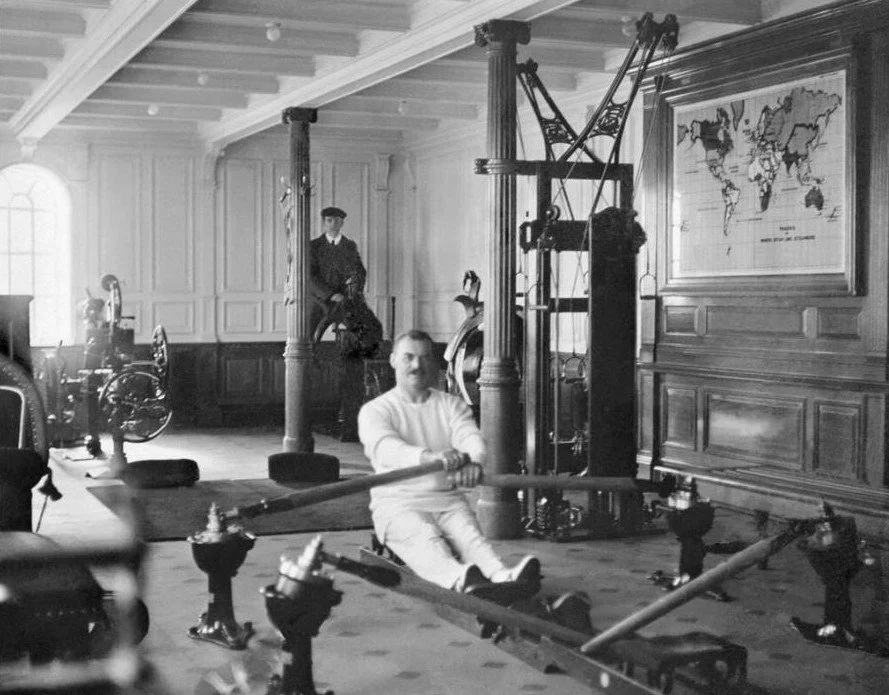
A photograph of the First-class Gymnasium on Titanic 1912
First class passengers had the luxury of a gymnasium for passengers to use when they wanted. Keeping fit and athleticism was a new craze to Edwardians, and a relatively new amenity on a ship. Located on the Boat deck just off the Grand staircase, the gymnasium offered rowing, and cycling machines, as well as weights, boxing punch bag, and horse riding. A Gymnasium steward was provided to assist with the sports equipment, and children were allowed in between 13.00 - 1500hrs.
Squash/Racquet Ball
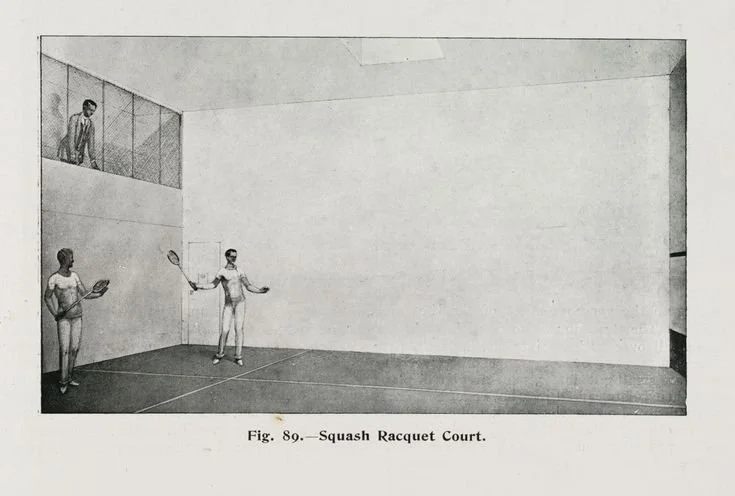
An artist impression of the Squash court with spectators
First class passengers were provided with a Squash court on G Deck with direct access from first class accommodations. Personal health was fashionable to Edwardians, and many people took up sports, and squash was a quick and fast paced game that could be played by oneself or up to four people. The court was a popular amenity for passengers to use with other passengers or the Racquet steward (instructor) that was provided. Tickets to book slots were 2 shillings for 30 minutes obtained from the pursers office.
Turkish Bath
First class passengers were provided with a Turkish bath facility, like a modern spa. This collective suite had various heated rooms for passengers to sweat out their impurities. Starting off cool in the cooling room and gradually working through to a sauna style hot room.
The shampooing rooms provided passengers with a water massage and a full body scrub. opperated by a technician to provide maximum pressure and essential oils.
The Electric bath, was a contraption that would bathe the body in hot electric light which was thought to have healing benefits. The heat from the lamps would make the box-like contraption very hot and cause the body to sweat and give the skin to glow.
The Turkish baths located on F-deck was open from 06.00-09.00hrs for men and 10.00-12.00hrs for women. Tickets could be bought from the pursers office with free access to the pool.
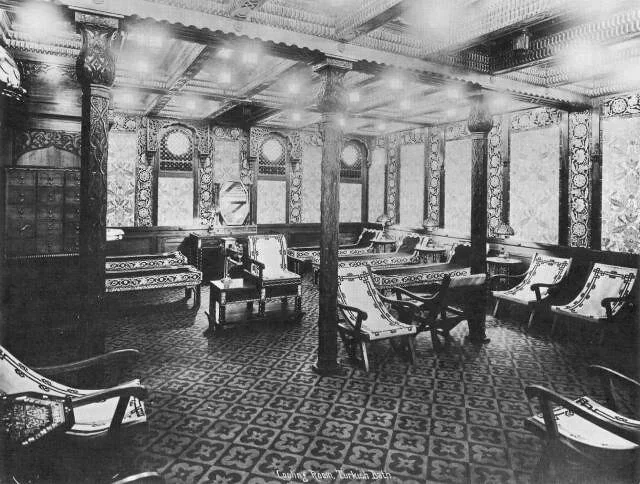
A photograph of the the Cooling room on Olympic as part of the Turkish Baths 1911
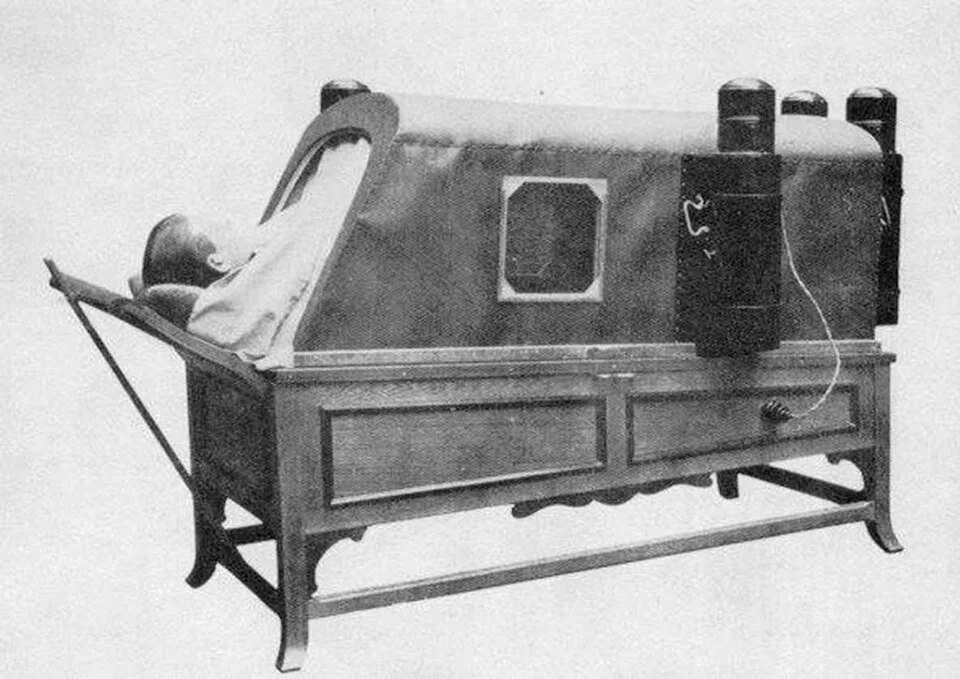
The Electric bath as part of the Turkish baths
Swimming Baths
Or the swimming pool to many, 'the baths' is a British term referring to the room rather than the actual pool. Titanic was one of the first ships to be built with a swimming pool and was an amazing technical achievement at the time. The pool was part of the Turkish baths complex and was filled with heated salt water.
Tickets were purchased from the Pursers office and available to use from 06.00-09.00hrs for men and 10.00-12.00hrs for women. Sexes were separated and could not use the facility at the same time. Children were not permitted to use the pool but a blindeye was turned if with an adult.
Fresh water showers were provided too, to wash after swimming as well as changing facilities.
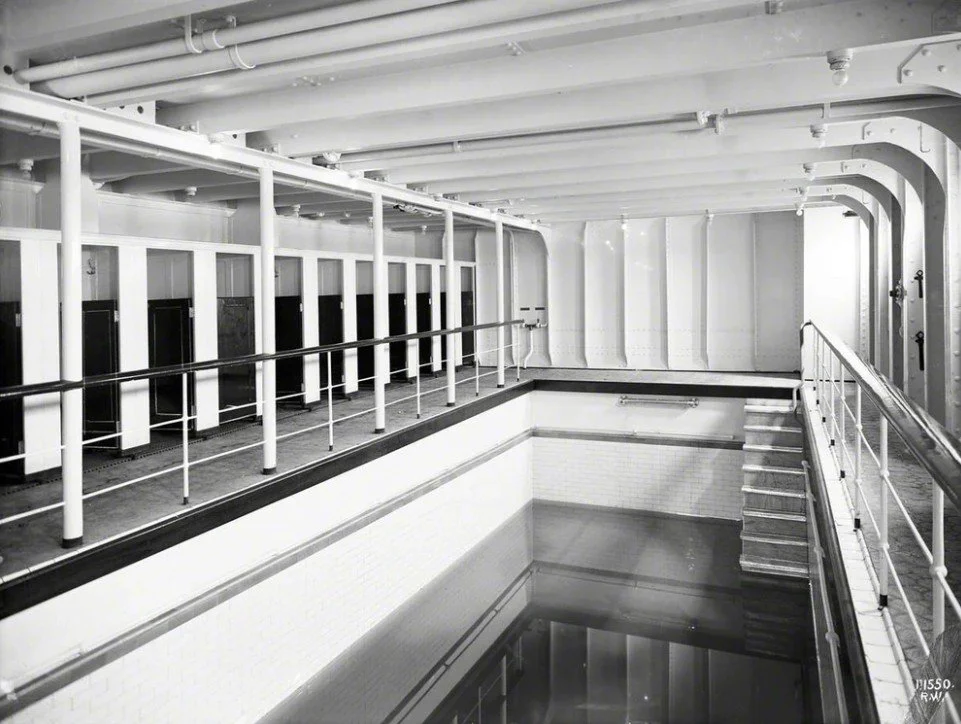
A Photograph of Olympic’s Swimming Baths 1911
Barber
Gentlemen in first and second class were provided with barbers to assist with male grooming hygiene, haircuts, and facial hair cuts. Going to the barbers would be an enjoyable self grooming time, and also to feel good ready for the evening dinner.
Ladies would usually have maids and stewardesses to do their hair and various beauty regimes in their cabins. As custom at the time, it was frowned upon for ladies to show their hair down in public. However, ettiquete relaxed and Olympic was later fitted with a Ladies hairdressers salon.
The barbershop was also a place to buy trinkets, tobacco, and toys as well as aftershaves, ointments and grooming products.
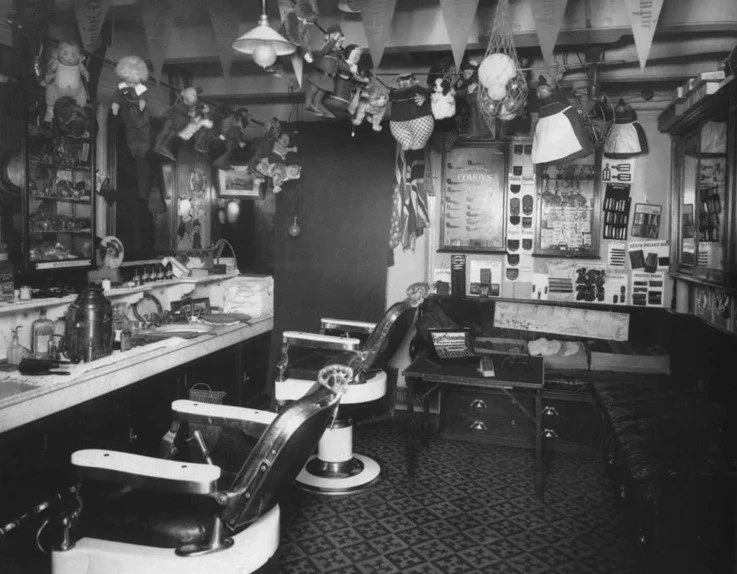
A Photograph of the Second-class Barber shop on Olympic 1911
Marconigrams
Marconigrams were telegrams sent through the ships wireless Marconi telegraph. Not only for ship communication but passengers could use this service too. This new technology was still a novelty on a ship and Titanic was provided with the most powerful Marconi telegraph machinery. This guarenteed maximum coverage and able to communicate with land at all times. For a small fee, first class passengers could send and receive messages with people on land. This was a very popular service, and passengers found it fun to send and receive messages while at sea.
Reading / Writing
Reading and Writing was a popular Edwardian pass time. Designed as a ladies drawing room, it provided a place for ladies to withdraw after dinner as was part of social etiquette at the time. However, this proved less popular as passengers preffered other areas of the ship and was later reduced in size on Olympic.
Titanic provided rooms specifically for Reading and writing like the First class Lounge, and the Reading and Writing room. Second class had a Library, and the Third class had a General room. Education was the basis of society and reading was essential to that. Passengers would bring books onboard and First and Second class passengers could borrow books from Titanic. Passengers would write postcards and letters, as well as personal diaries.
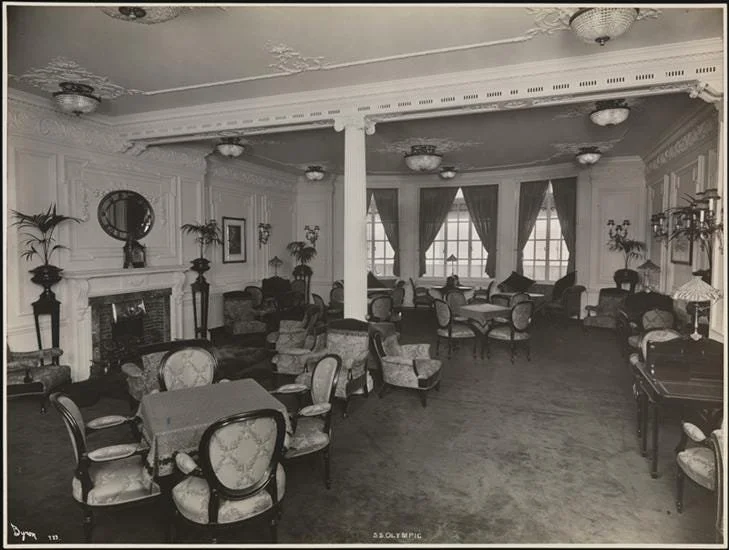
Photograph of Olympic’s Reading and Writing room 1925. Note the alcove has been removed due to lack of use.
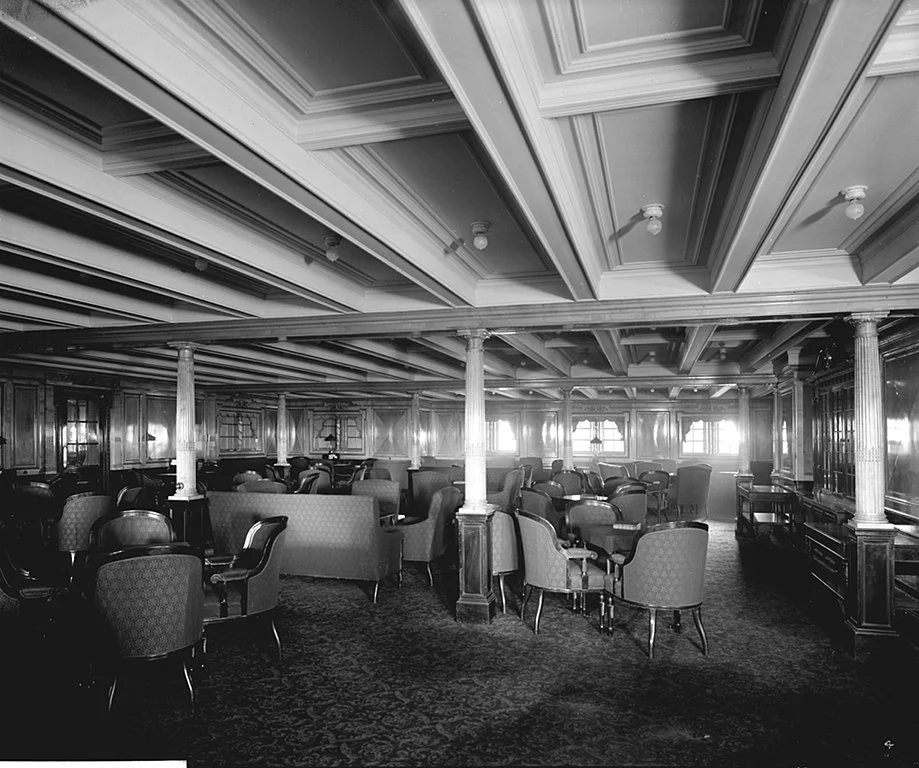
Photograph of Olympic’s Second-class Library 1911. Used as a lounge or a ladies drawing room.
Socialising
Meeting new people played a significant role in the entertainment onboard ships during the Edwardian era. It was not only a source of amusement but also vital for forging fresh acquaintances, making valuable business connections, and connecting with fellow travellers. For first-class passengers, particularly, the art of discerning the social landscape and aligning oneself with the right company was a crucial pursuit.
Being sociable was not only encouraged but practically unavoidable, given that communal meals and daily activities necessitated interaction with fellow passengers. The Edwardians had a genuine penchant for socialising and relished the opportunity to expand their social circles. Often, passengers moved in similar social spheres, and while some might have known each other beforehand, voyages frequently facilitated the formation of new friendship groups.
General chit-chat, gossiping, and the convivial act of sharing drinks were effective means of passing the time while aboard, further enriching the social experience of the journey.
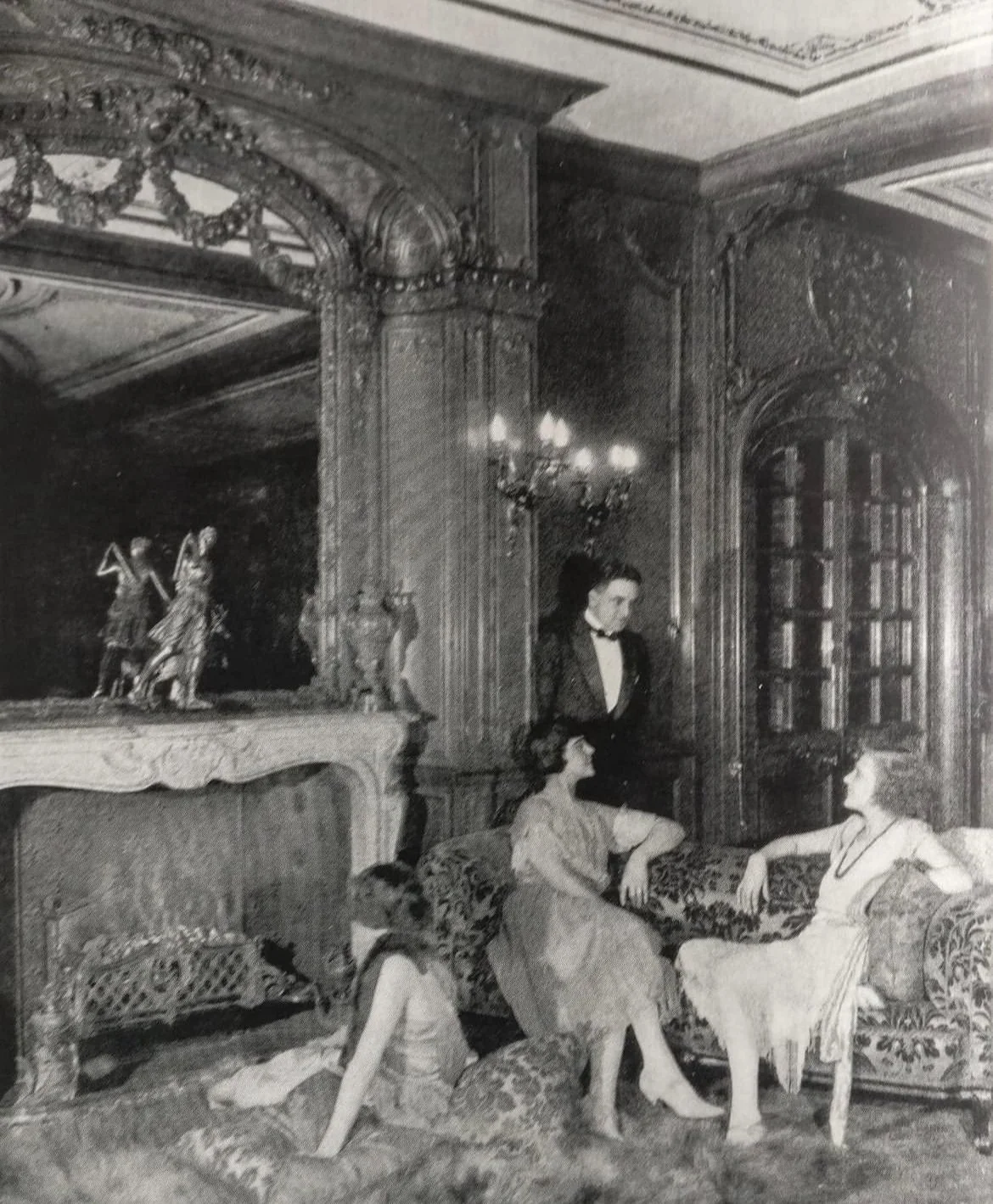
A Photograph of First class ladies sitting by the fireplace in the Lounge, Olympic 1930s
Musical Concerts
Titanic provided a small band to be enjoyed by First and Second class passengers. The band were not employees of the White Star Line but instead hired from an outsourced company. This made the band members technically Second-class passengers. Passengers however would usually arrange a collection of tips for the musicians. The band played at different times in different areas:
Second class concerts, in the aft C deck reception room, 10.00-11.00hrs, 17.00-18.00hrs and 21.15-22.15hrs
First class, Grand staircase boat deck, 11.00-12.00hrs
First class, D Deck Reception room, 16.00-17.00hrs and 20.00-21.15hrs
First class, A Deck lounge, 14.00-15.00hrs
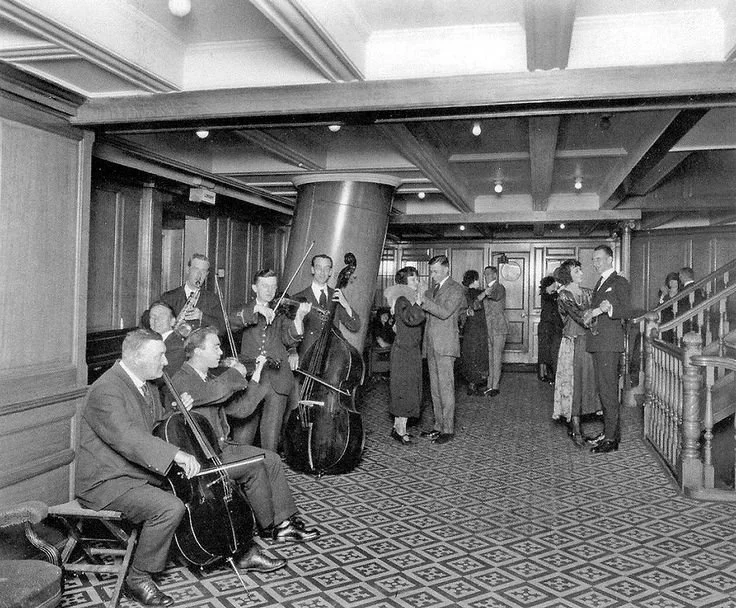
A Photograph of the ships band playing a concert in the Second-class Aft Reception room on C-Deck 1930s
Playing Music
All classes were provided with pianos, not just for the band but for anyone that wanted to play, and it was encouraged. Pianos were a popular Edwardian pass time, with many people having them in their homes for household entertainment, many people knew how to play. Passengers could play the piano for entertainment and people could crowd around, sing and dance. Passengers were also encouraged to play their own instruments that they've brought onboard. As third class were not provided with a band, the piano in the general room and personal instruments became the focus of entertainment where passengers could sing, dance and listen.
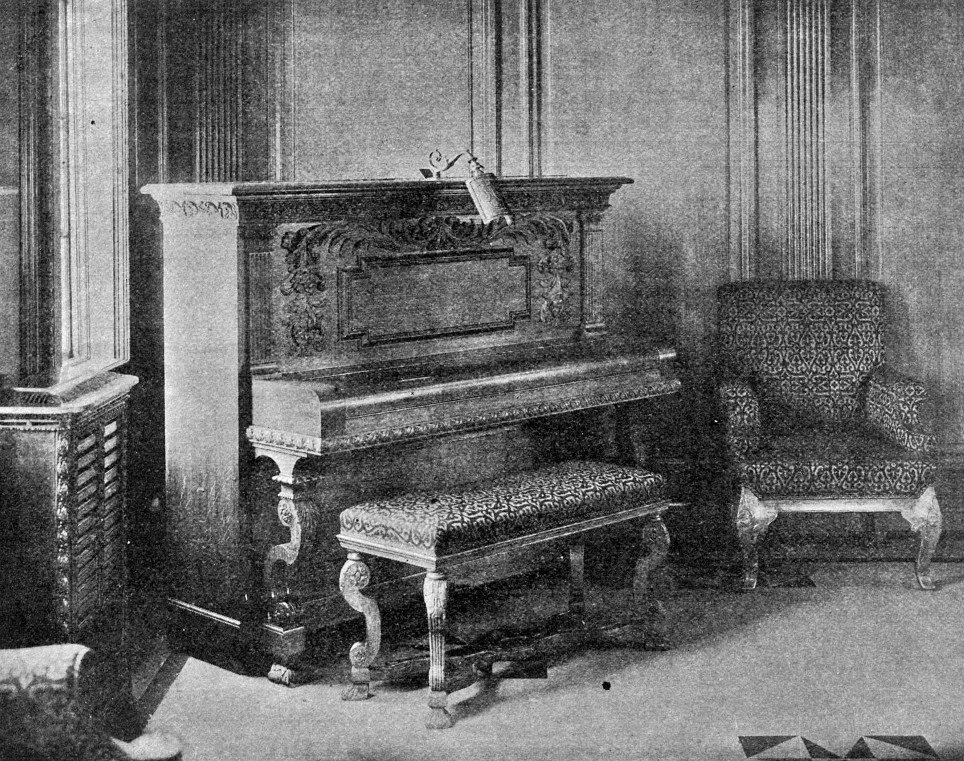
A Steinway piano provided for First-class, Boat deck Grand staircase
Dancing
Dancing was a cherished pastime during the Edwardian era, and it was common for most people to be well-versed in popular dances of the time. With regular music concerts and pianos available in all passenger classes, passengers had the perfect setup for impromptu dances. They could simply select a partner and start dancing, immersing themselves in the joy of the moment.
Dancing not only provided a source of entertainment but also served as an excellent icebreaker and conversation starter. It was a social activity that allowed passengers to forge new friendships, engage in conversations, and create memorable moments while aboard the ship.
Meal Times
Meals aboard the ship were unquestionably the highlight of every passenger's voyage, regardless of their class. The culinary offerings were exceptional, with chefs of the highest caliber, some with experience in renowned hotels and restaurants around the globe, responsible for creating these gastronomic delights.
The daily meal schedule was structured as follows:
- Breakfast was elegantly served between 08:00 and 10:00 hours.
- Luncheon took place at 13:00 hours.
- Dinner, the grand event of the day, commenced at 19:00 hours, with lights dimmed at 23:00 hours.
Dinner was a spectacle in itself. To announce the dress code, a bugler would stroll the decks, playing his horn. This melodious call signified that dinner would be served in 30 minutes, prompting passengers to prepare accordingly. In first class, dinner was a strictly formal affair, and passengers who were not appropriately attired could be denied entry.
Dressing for dinner was not merely a requirement but an integral part of the event. Passengers donned their finest attire, often showcasing their latest acquisitions from the most esteemed fashion houses in London or Paris.
First-class passengers were treated to a sumptuous 10-course meal, each dish crafted with precision and artistry. The meal was complemented by an exquisite selection of wines, champagnes, confectioneries, and sweets, all presented in a manner of utmost elegance. Additionally, first-class passengers had the option to dine in the A la Carte Restaurant, a separate dining venue that incurred an additional cost.
Second-class passengers, enjoyed meals prepared in the same kitchens as their first-class counterparts. They too adhered to a formal dress code and savored up to 8 courses of delectable cuisine.
In third class, dinner was served in a 3-course arrangement, with some variations in dining times to accommodate all passengers.
Dinner wasn't solely about indulging in culinary delights; it was an opportunity for civilised enjoyment, socialising, and a display of one's refined tastes. However, failure to uphold proper etiquette, adhere to the dress code, or maintain a decorous demeanor could lead to the tarnishing of one's reputation among fellow passengers.
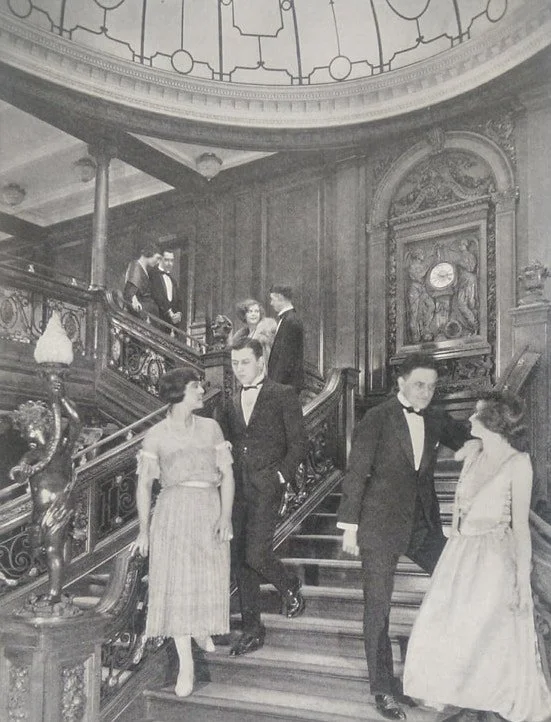
A photograph of First class passengers descending for dinner on Olympic 1920s
Tea Time / Afternoon Tea and Coffee
Afternoon tea is usually in the mid-afternoon, around 4pm. Passengers could gather with new friends and socialise with tea/coffee and light refreshments. This could be taken in most public areas in both first and second class. Tea time was an important event where passengers would discuss ship events, gossip, or make future onboard plans. First class had specific areas for tea, like the Verandah cafes, the cafe Parisien, the lounge, or the D deck reception room. Tea could also be taken on deck, weather permitting, and in your room. Second class could take tea in the Library. Third class were also served tea and coffee in their public rooms. All classes had tea and coffee options with every meal too.
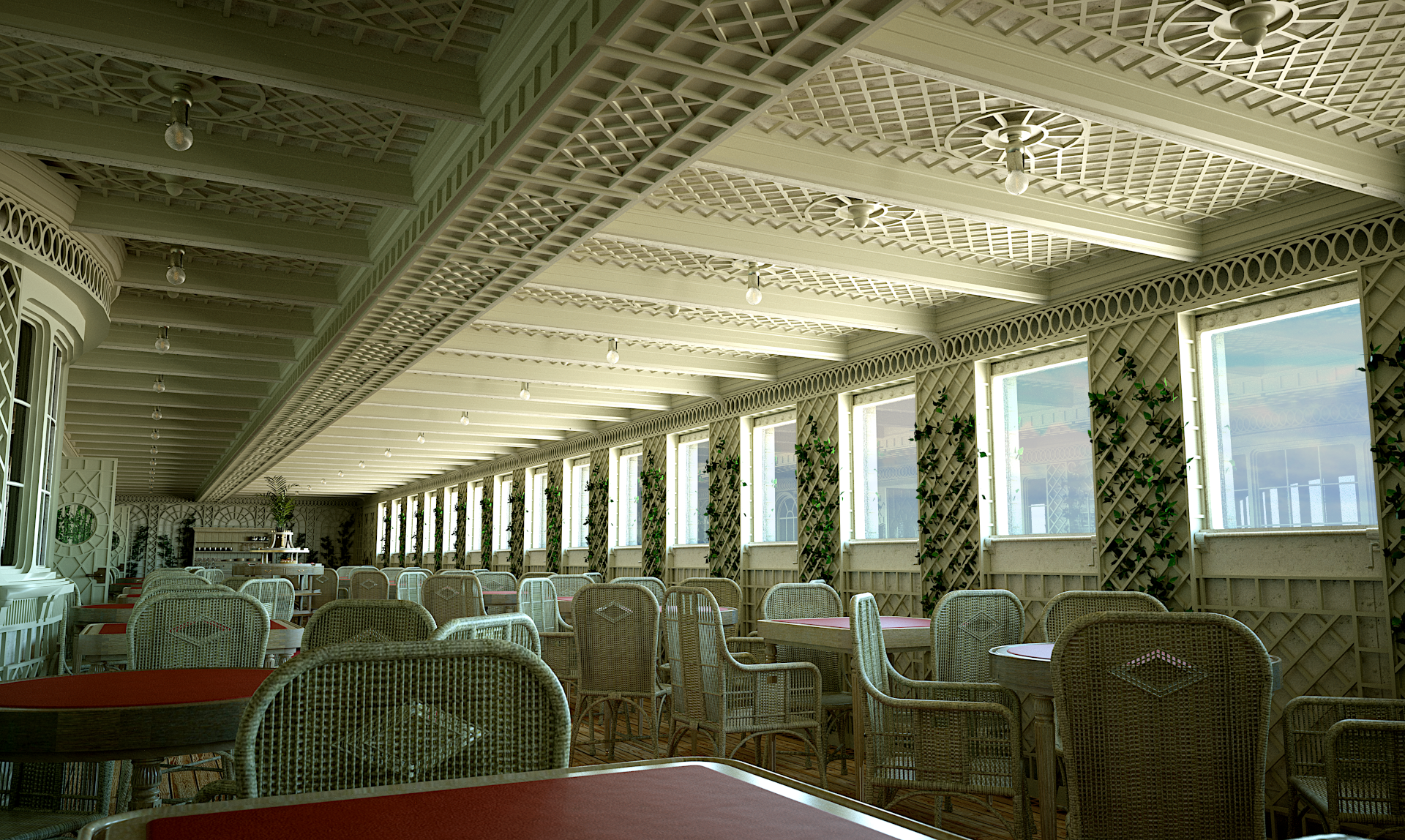
Parisien Cafe on Titanic. Artwork by RMSTitanic.Design
Alcohol
Social drinking was a good way to pass the time, many people would have drank especially at meal times. Alcohol was provided to all classes as part of the ticket price. The more expensive wines and champagnes were charged extra, and any alcohol in the restaurant were added to the bill. Gentlemen would drink alcohol in the smoking rooms, and while playing card games. Ladies would drink alcohol after dinner, either in the reception room or in the lounge.
Third class were also provided with beer and ales on an evening.
Private Parties
First class passengers would host private parties back in their cabins after most of the public rooms had closed. Especially passengers with the millionaire suites, or Parlour suites with the private promenades and sitting rooms. These rooms were designed for private parties. Passengers would host tea, dinner, or luncheons. or a just a few drinks and a card game.
Second and third class passengers were not allowed to host private parties, but they would chat in their cabins with their travel companions or newly aquanted cabin mates, until the early hours.
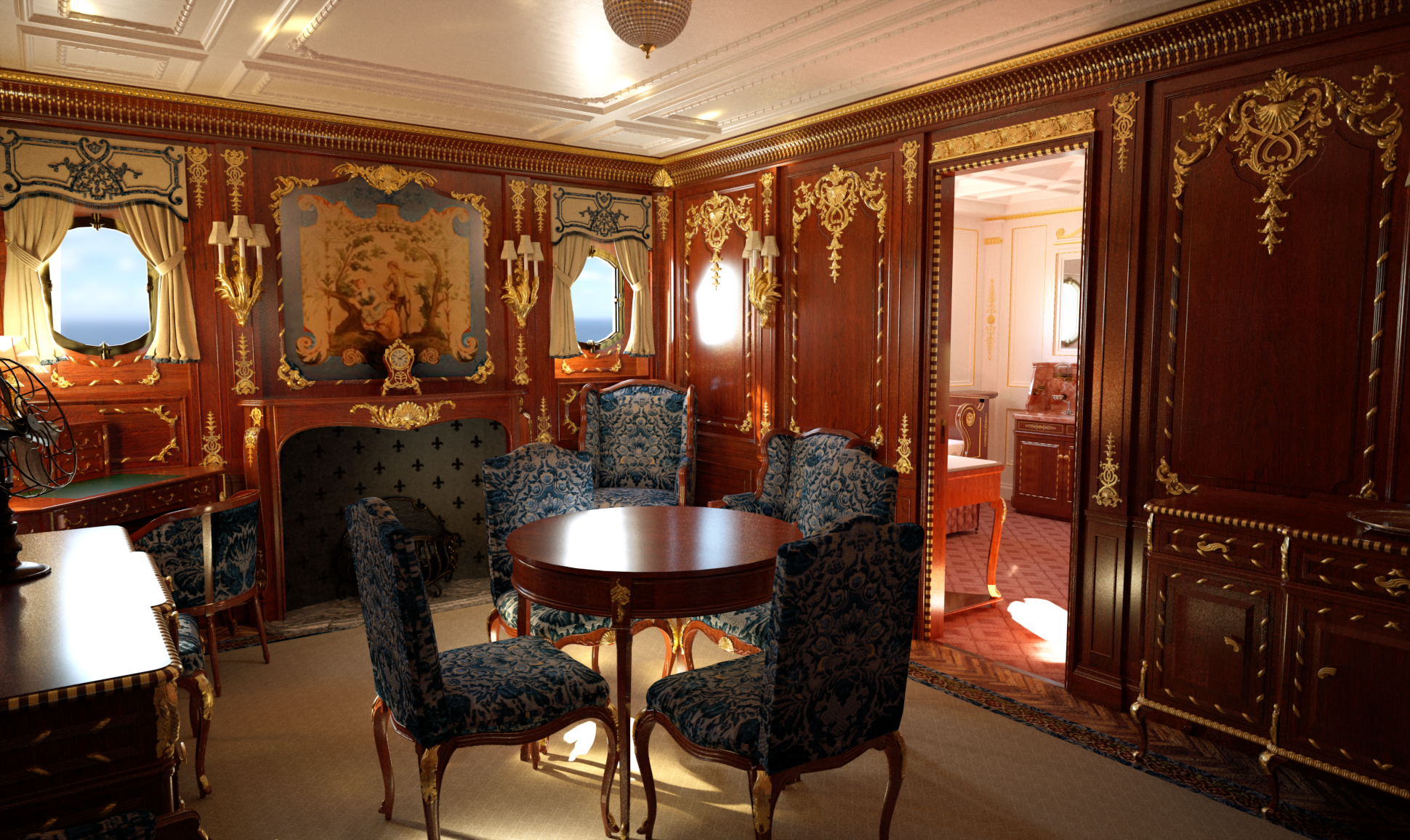
A Private Sitting Room for entertaining C-55 on Titanic. Artwork by RMSTitanic.Design
Cinema
With the new era of film and movies in the 1920s, peoples past-times were changing towards going to the Cinema/Movie theatres. To keep up with the changing times, Olympic was installed with Cinema’s in both First and Second class. Temporary screens were installed in the first class lounge and second class library so that the room could be easily rearranged for a film showing.
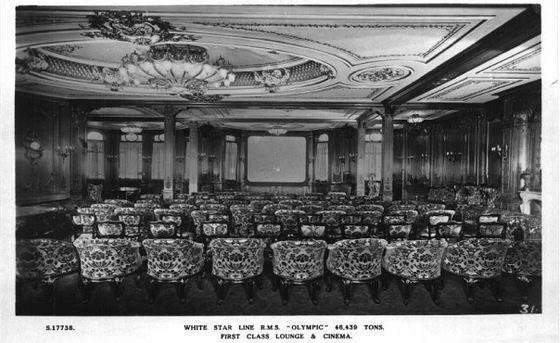
A photograph of the First class Lounge converted into a temporary cinema, Olympic 1930s
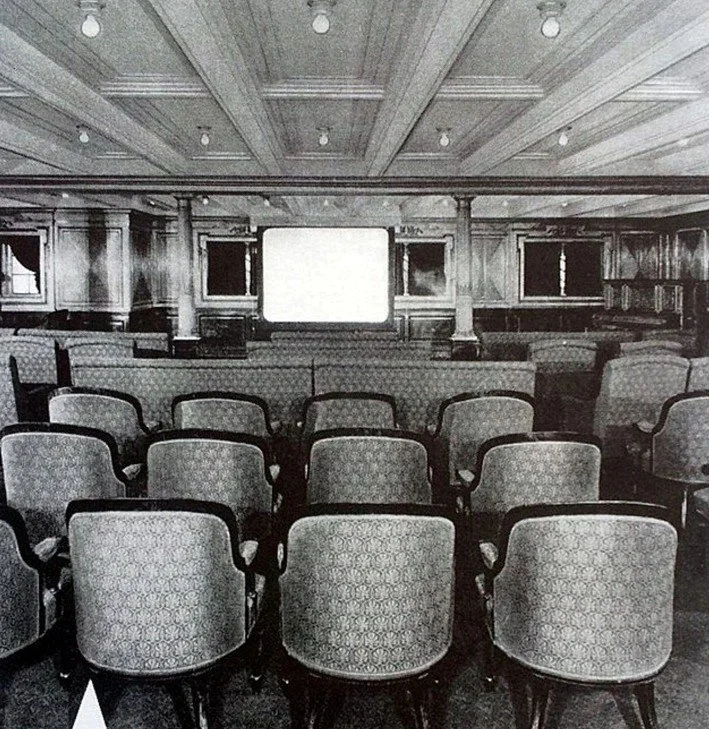
A photograph of the Second class/tourist class library converted in to a temporary cinema, Olympic 1930s
What activity did you find most interesting?
Written by Christopher Garcia-Walker of RMSTitanic.Design
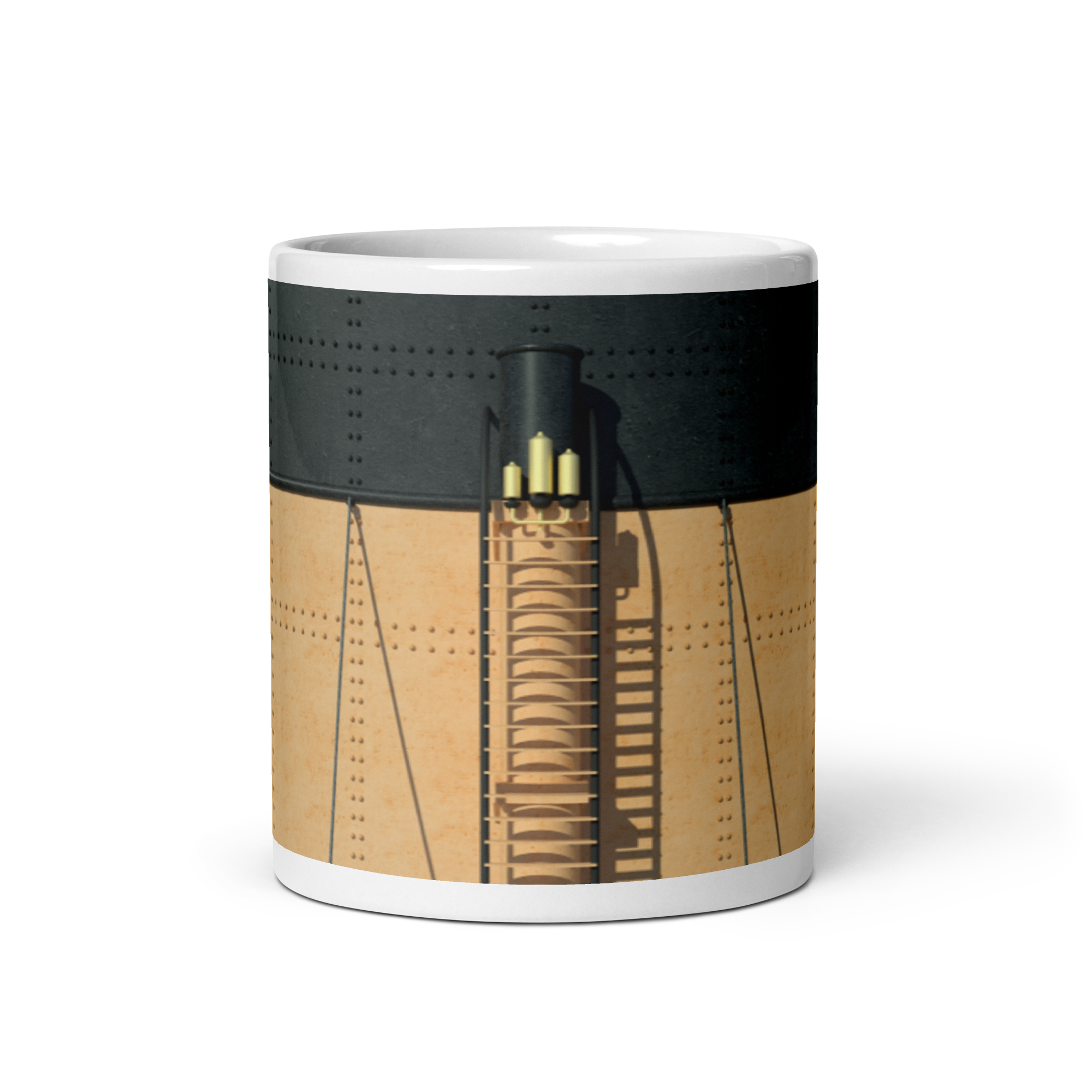


Titanic Facade Mug
All artwork by RMSTitanic.Design
Whether you're drinking your morning coffee, evening tea, or something in between—this mug's for you! It's sturdy and glossy with a vivid print that'll withstand the microwave and dishwasher.
• Ceramic
• 11 oz mug dimensions: 3.8″ (9.6 cm) in height, 3.2″ (8.2 cm) in diameter
• 15 oz mug dimensions: 4.7″ (11.9 cm) in height, 3.3″ (8.5 cm) in diameter
• 20 oz mug dimensions: 4.3″ (10.9 cm) in height, 3.7″ (9.3 cm) in diameter
• Lead and BPA-free material
• Dishwasher and microwave safe
• Blank product sourced from China
This product is made especially for you as soon as you place an order, which is why it takes us a bit longer to deliver it to you. Making products on demand instead of in bulk helps reduce overproduction, so thank you for making thoughtful purchasing decisions!
Age restrictions: For adults
EU Warranty: 2 years
Other compliance information: Meets the lead and cadmium level requirements.
In compliance with the General Product Safety Regulation (GPSR), Oak inc. and SINDEN VENTURES LIMITED ensure that all consumer products offered are safe and meet EU standards. For any product safety related inquiries or concerns, please contact our EU representative at gpsr@sindenventures.com. You can also write to us at 123 Main Street, Anytown, Country or Markou Evgenikou 11, Mesa Geitonia, 4002, Limassol, Cyprus.